
June 2025
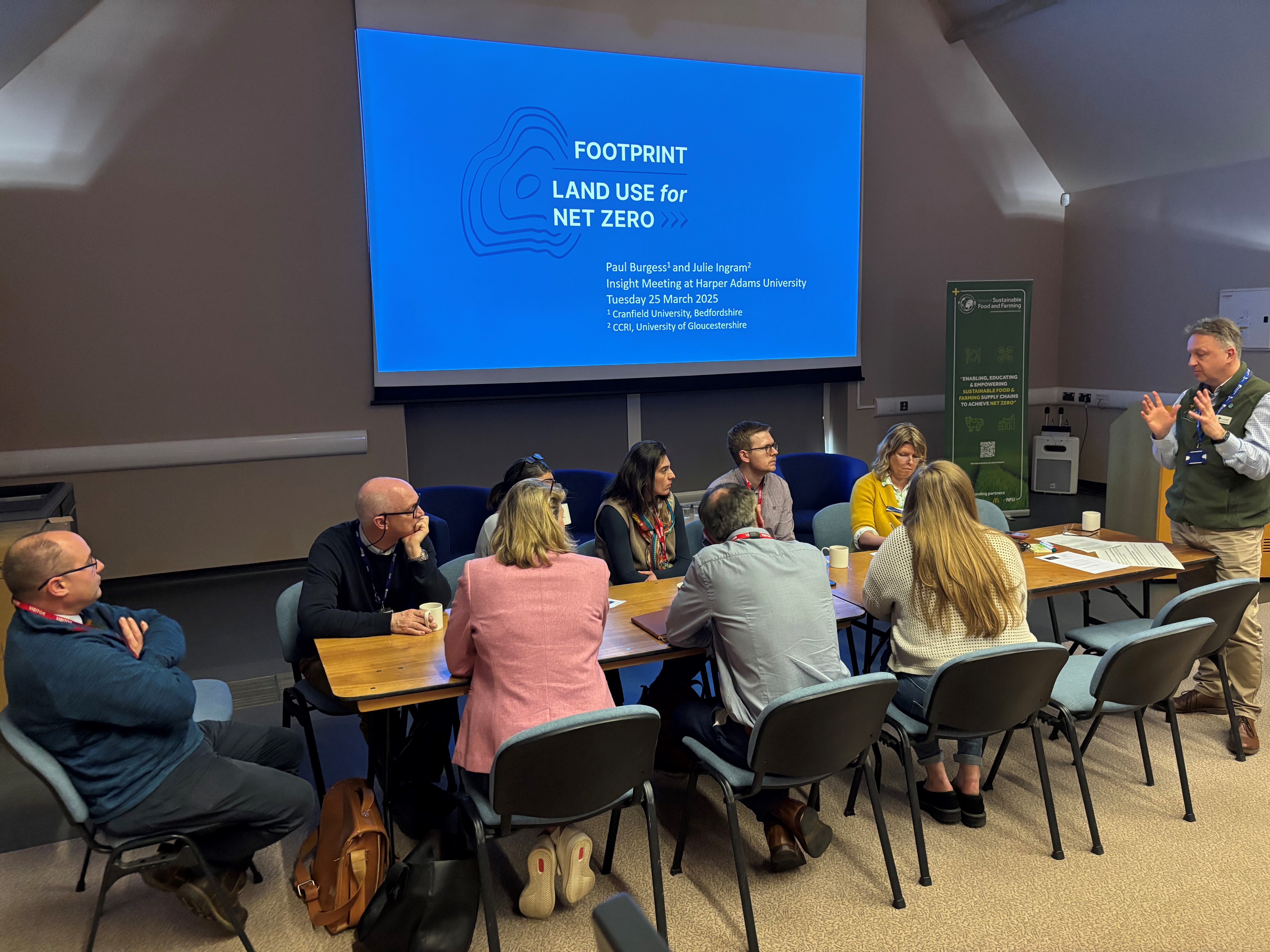
Two workshops at Harper Adams and Cranfield University bought together a diversity of people to hear about the project and share their views. Using a ‘world café’ format, there were enthusiastic discussions about the key players in the farm GHG accounting ’ecosystem’, the level of knowledge and understanding about GHG accounting and calculators, and whether farmers and advisers outside supply chain contracts were losing out on opportunities for support and learning.
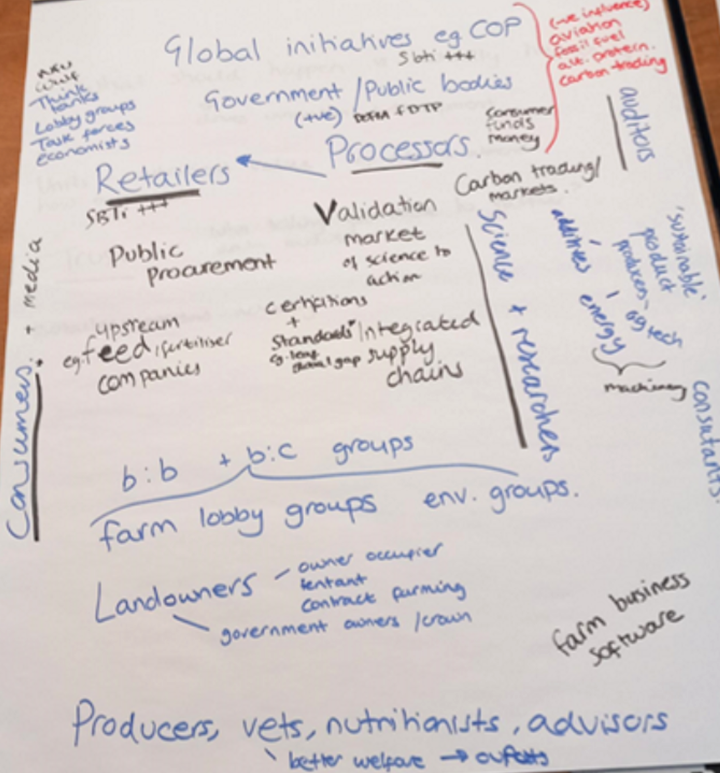
Key players
It was often felt that fragmentation with different people and organisations having conflicting interests has led to confusion, uncertainty especially around ownership and rights, and lack of trust. While retailers and processors were sometimes seen as dominant players, other groups like auditors and validators could be more influential. Some felt that policy has a key role to play but has left responsibility for auditing, validation and certification to the markets, leading to confusion, uncertainty and lack of trust.
Knowledge and understanding
It was suggested that there may be too much focus on absolute numbers and that it is crucial to be transparent about uncertainties in data. Integration was often considered important, thinking beyond a GHG footprint per unit of output or area to link GHG impact with nutrient density, and outside the GHG box so assess impacts on biodiversity etc. It was felt that AI could leverage big data to provide insights and reduce the monitoring burden for farmers, but it could also amplify errors. Feedback on many farmers’ views on GHG audits was consistent – audits are generally seen as an imposition rather than providing a business advantage. How then can the data be made valuable to them?
Inside v outside direct supply chains?
The need for better support mechanisms were identified at both workshops. Incentives were generally seen as really important as they can help farmers prioritise especially as their time is limited. However the role of carrots v sticks was also debated. Dedicated supply chains were sometimes seen as providing help and support, but there was a recognition that individual farmers will/do respond differently to supply chain requirements. There was a consensus on the need for clear communication and practical tools to enhance productivity and profitability while reducing emissions.
More about the workshops
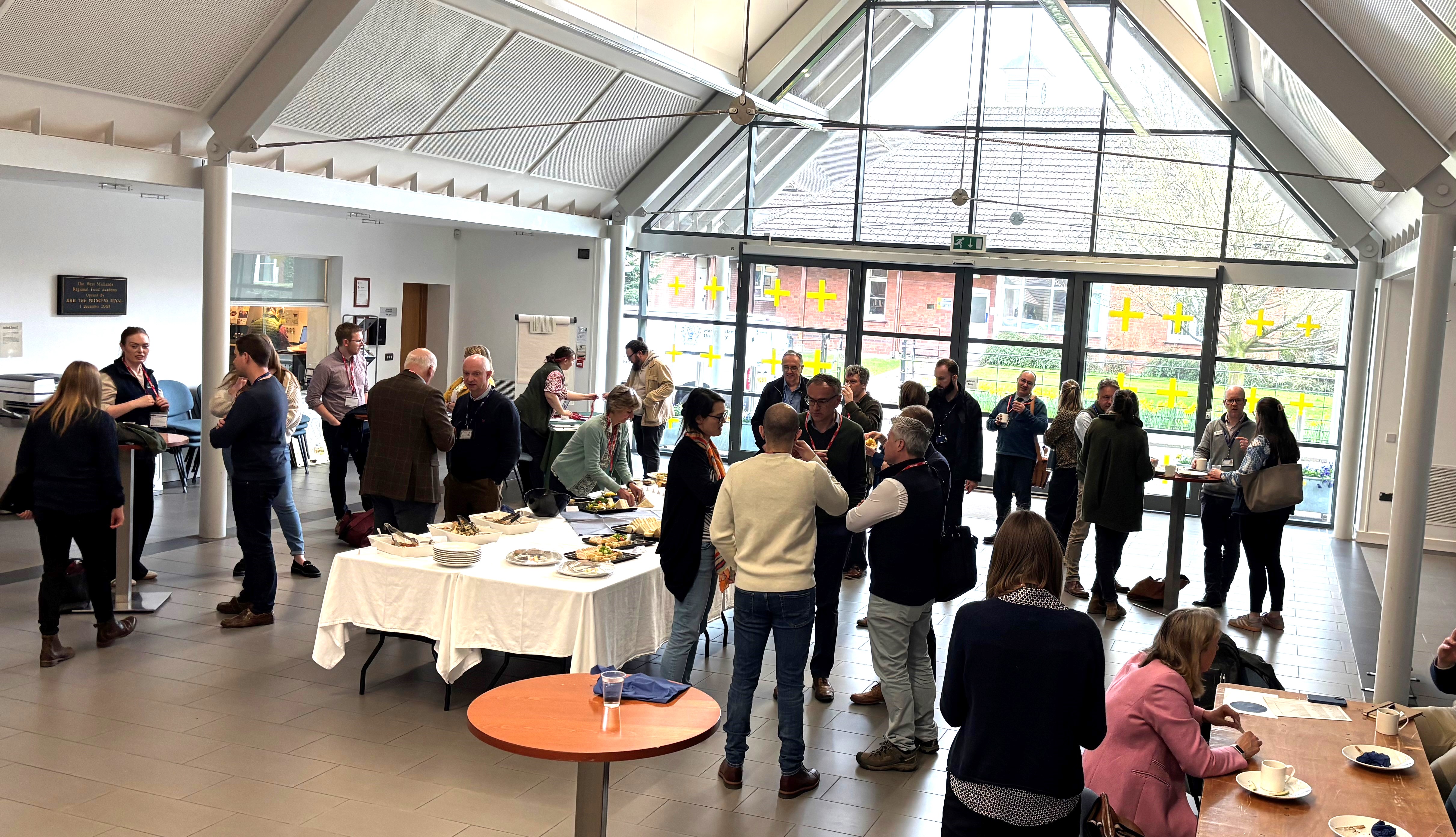
These initial workshops planned for all four nations aim to raise awareness about the project, explain how the calculator companies in the project are working together, and to get a range of people talking and sharing their experiences of GHG footprinting in a ‘world café’. The latter aims to encourage meaningful conversations about topics that matter to attendees and mimics a café setting.
 LUNZ Footprint