
July 2025
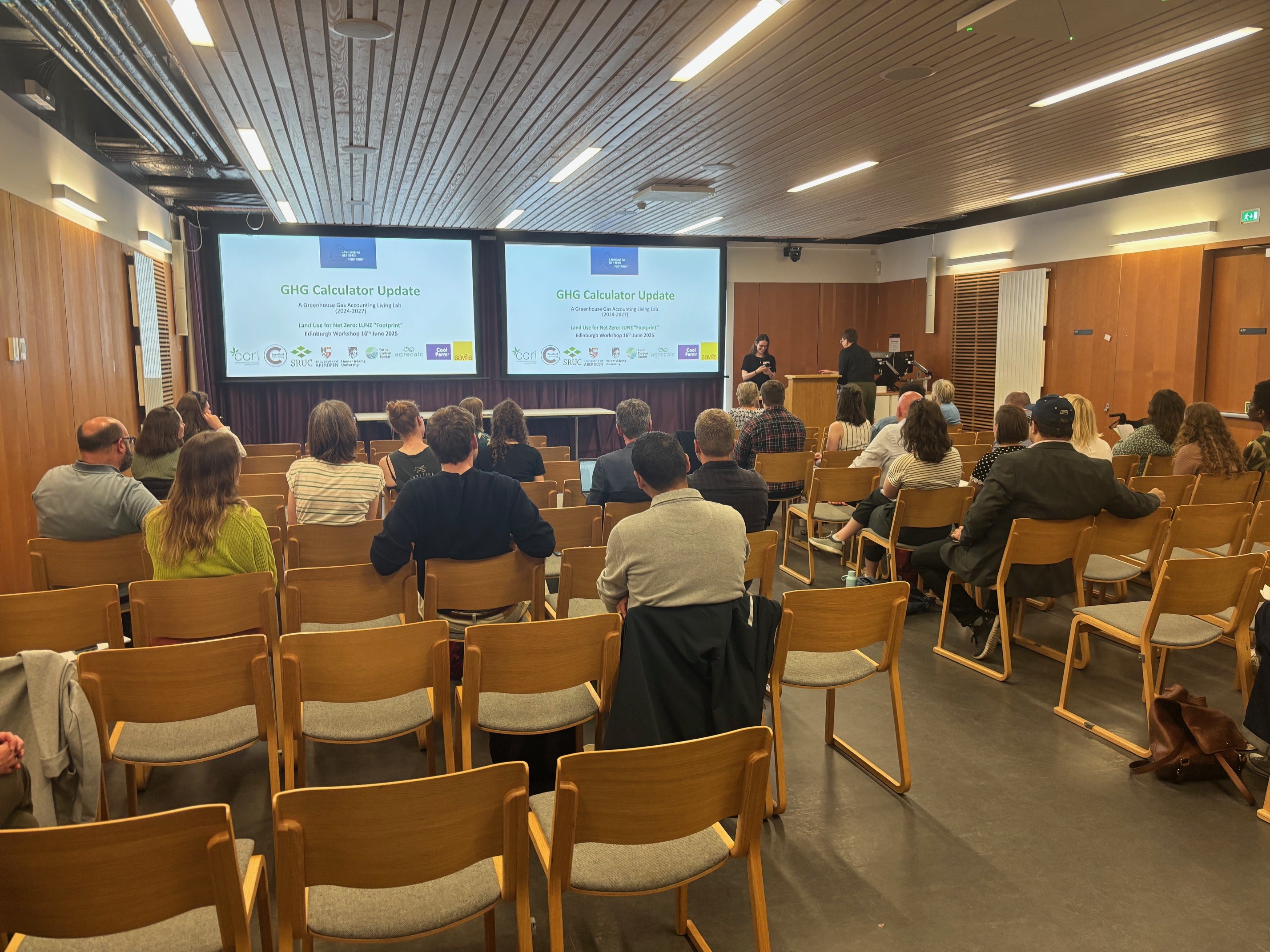
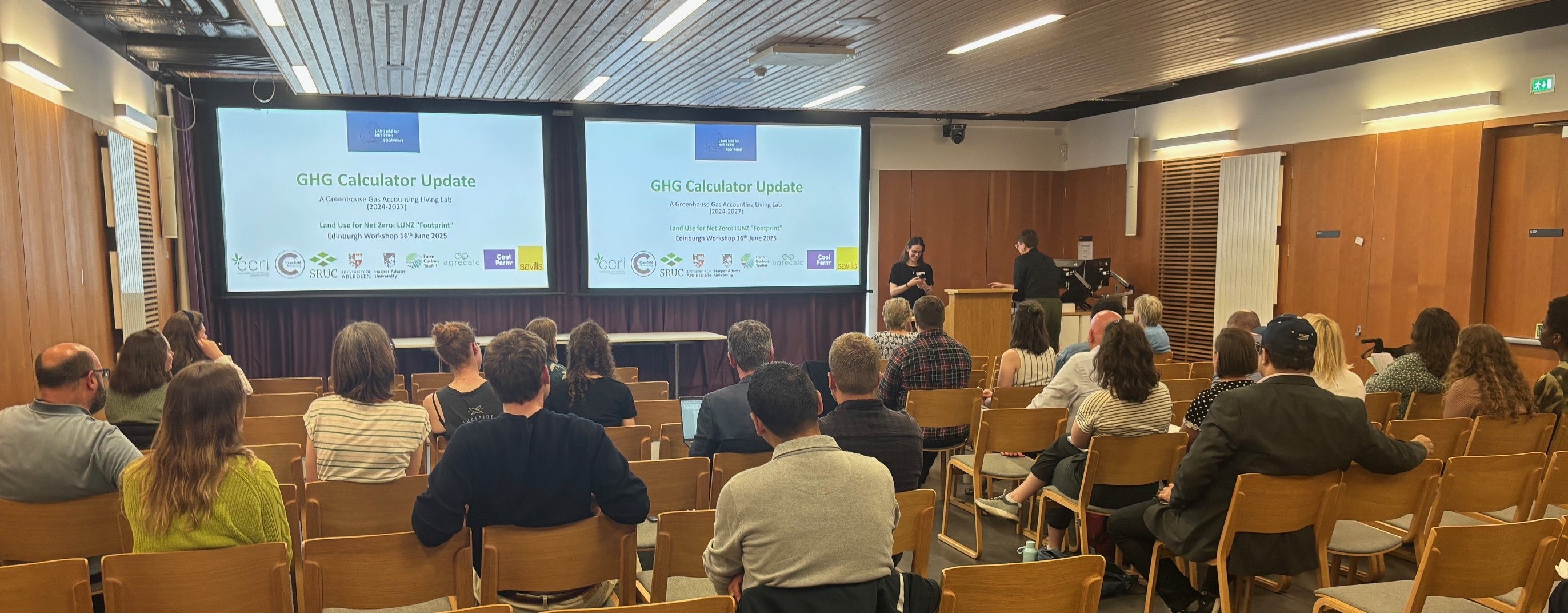
A wide range of Scottish stakeholders turned out for LUNZ Footprint’s workshop at Scotland’s Rural College (SRUC). Debates centred on the key players in the farm GHG accounting ’ecosystem’, the level of knowledge and understanding about GHG accounting and calculators, and whether farmers and advisers outside supply chain contracts were losing out on opportunities for support and learning.
Key players
Although it has been said that there are 60+ calculators, it was felt that in reality there were really only four farm tools recognised by governments in the UK. However many companies, consultants and universities may have their own bespoke calculators. Whilst it was noted that tools provide different services and have different users, there was a general feeling that the current situation is characterised by ‘learning versus reporting’.
Administrations are also taking a different approach. In Northern Ireland, the focus is giving farmers a baseline to build on. However the collection of that data by NI officials has been controversial in the farming community. The Scottish government has decided not to collect data.
Knowledge and understanding
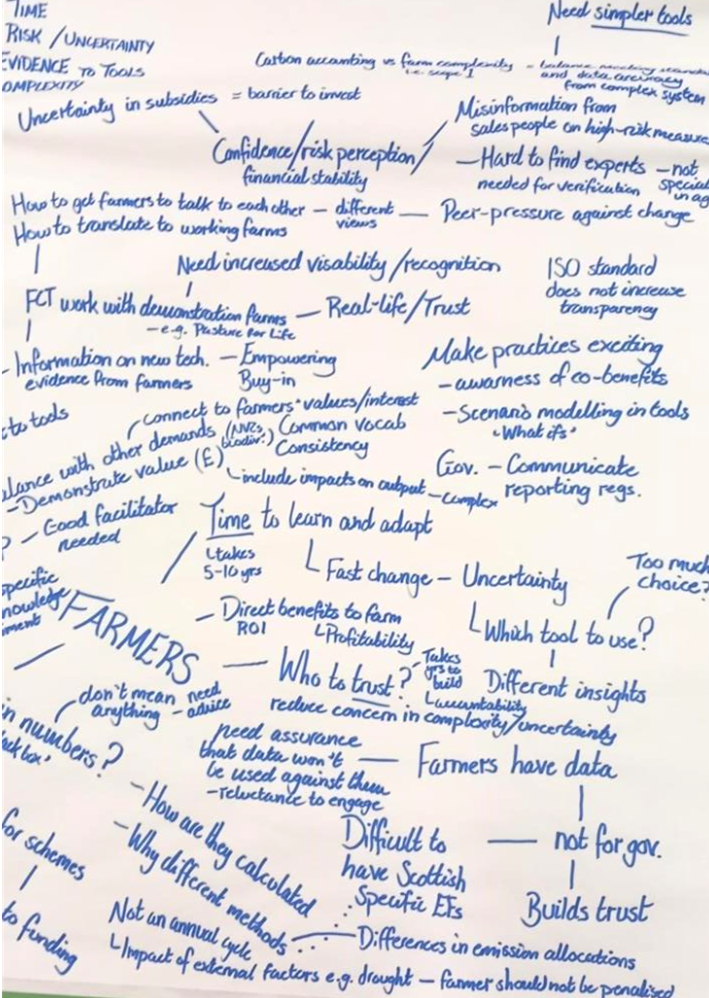
Trust in the individual delivering the information e.g. vets, advisors, was seen as important as the information itself. The levels of mistrust e.g. in ‘black box’ tools, in methodologies and standards, was suggested to be high, heightened by farmers feeling penalised by external factors like weather fluctuations.
Assessing the synergies and trade offs was seen as requiring knowledge e.g. to enable both emissions reduction and biodiversity conservation, an egg producer has reduced soya inputs but egg quality has been compromised.
More feedback from actual on-farm practice into the tools would both help to update the calculators and to empower farmers as they could get ‘credit’ for trying something new.
Inside v outside direct supply chains?
It was felt that there was scope to improve the provision of non-financial support as farm businesses not formally integrated in supply chains might not always know ‘what to do next’ after an audit nor have the tools to make the right decisions. This could lead to inappropriate recommendations being followed. Farm advisors and agents were identified as important in knowledge exchange but might themselves need additional training.
There is a gap in information about farmers who were not integrated in supply chains but some sort of community which facilitates knowledge sharing and peer-to-peer learning was seen as beneficial to enhancing business sustainability.
Discussions highlighted that retailers and processors can influence farmers’ behaviour through the provision of premiums and ‘carbon score or threshold’-associated contracts. However there were questions about who should ultimately pay for premiums i.e. retailers, processors, or consumers.
More about the workshops
These initial workshops planned for all four nations aim to raise awareness about the project, explain how the calculator companies in the project are working together, and to get a range of people talking and sharing their experiences of GHG footprinting in a ‘world café’. The latter aims to encourage meaningful conversations about topics that matter to attendees and mimics a café setting.
 LUNZ Footprint